



 Ortho | Sports Medicine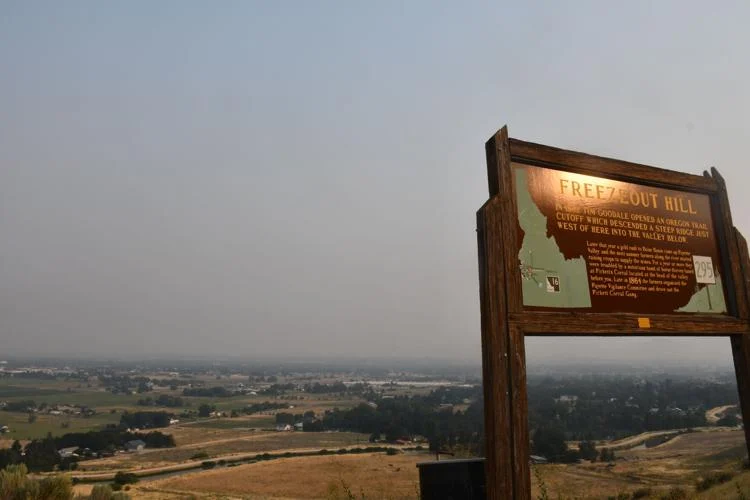
Residents across southwest Idaho have become familiar with persistent wildfire smoke this summer. Air quality alerts have placed the Emmett area in the “Very Unhealthy” category, with an Air Quality Index (AQI) of 182 as of Monday because of ongoing fires burning in Idaho and Oregon.
According to Idaho News 6, the Big Grass Fire along the eastern Oregon-Idaho border had grown to approximately 280,000 acres as of Sunday.
Josh Smith, a meteorologist with the National Weather Service in Boise, said the Big Grass Fire is one of several large fires contributing to smoky conditions across southwest Idaho. He said fires burning in Oregon’s Harney, Malheur and Baker counties, along with prevailing southwesterly winds, have carried smoke directly into Gem County.
Recent food recalls causing more anxiety for shoppers trying to stay safe
“The winds aloft are from the southwest. So those fires being just southwest of those two counties, the smoke is carried from the southwest to the northeast. That’s the general flow, and that’s typical for this time of year,” Smith said.
The current weather pattern has also allowed smoke to remain concentrated near the ground because several of the fires are relatively close to southwest Idaho. Smith explained the typical summertime Four Corners high-pressure ridge continues to produce a southerly to southwesterly flow, keeping Gem County in the path of smoke from eastern Oregon fires. He also noted that southern Gem County’s location within the Treasure Valley basin can allow smoke to settle into lower elevations.
Looking ahead, Smith said he expects little improvement over the next several days because the overall weather pattern is forecast to remain largely unchanged.
“I think it’s going to be like this through most of the week. I don’t think there’s going to be much improvement,” he said. “There’s not going to be any major shift In the pattern, there is some indication for this weekend and next weekend that maybe the flow gets to be a little bit more westerly. That might help at least from those fires south. But there’s a lot of fires in Oregon, so anything westerly, southwesterly, we’re just going to get smoke from all those fires. So I don’t think there’s going to be much improvement, at least in the foreseeable future.”
Smith said smoke is generally heaviest during the morning hours, when cooler overnight conditions trap it in valley bottoms before daytime warming helps mix the atmosphere. However, he said the number of nearby fires may limit how much conditions improve during the day.
He encouraged residents, particularly those in sensitive groups, to reduce their exposure to smoky conditions.
“Given the state of things right now, limit your time outside,” Smith said. “Especially for sensitive groups, those with respiratory problems, or allergies, or have some issues with smoke, should limit their time outside. If you’re going to be out, like, prolonged exposure outside, you may want to wear a mask. But our general message is, I would limit our outdoor time as much as possible, especially if you’re in a sensitive group.”
Dr. Trevor Tredennick, an emergency room provider at Valor Health, echoed that advice in an email to the Messenger-Index, saying people with asthma, chronic obstructive pulmonary disease (COPD), older adults and those who work outdoors are among the groups most at risk from wildfire smoke because of underlying respiratory conditions or prolonged exposure.
“Reschedule outdoor activities if possible until air quality improves,” Tredennick wrote. “If outdoor activities cannot be put off then take frequent indoor breaks, reduce heavy exertion, and consider a N95 mask.”
Tredennick said residents experiencing “significant shortness of breath or chest pain” should seek medical attention. He added that even otherwise healthy adults should consider modifying or postponing outdoor activities when air quality reaches the “Unhealthy” category and limit strenuous exertion if they must spend time outside.
For people with asthma or COPD, Tredennick recommended staying indoors whenever possible, keeping rescue inhalers or nebulizers readily available and talking with their healthcare provider about an action plan if symptoms begin to worsen. He also advised residents to reduce smoke exposure indoors by keeping windows and doors closed, running air conditioning systems on the recirculation setting and using a HEPA air purifier if available. Parents, he said, should consider moving children’s outdoor sports and activities indoors or rescheduling them until air quality improves.
For local growers, the smoky conditions have created a mix of challenges and benefits, according to Gem Orchards owner Lance Phillips.
While reduced sunlight has slowed crop development, Phillips said the smoke has also increased humidity, creating conditions that can promote fungal diseases while making outdoor work feel more oppressive.
“We’re basically getting a greenhouse effect,” Phillips said. “Smoke’s holding in the heat. We’re irrigating, so we’re making a sauna out here. It’s like a greenhouse.”
Phillips said the smoke also filters some of the sunlight crops receive, slowing photosynthesis and delaying ripening. Although that can postpone harvests for some crops, he said spreading out ripening can be beneficial for growers who otherwise would have large amounts of fruit becoming ready all at once.
“From a photosynthetic [standpoint], we probably filter in 20 to 30 percent of the light,” Phillips said. “That’s going to slow down growing the maturity of corn. It’s going to slow down our ripening. Is that a good thing for me? Yes, because I don’t need all everything ripe at once. So kind of slow and steady, and we get this every few years.”
Phillips said he’s noticed more customers choosing pre-picked fruit instead of picking their own as temperatures climb and air quality worsens.
Despite the smoke, Phillips said orchard work continues much as it normally would. He spends eight to 10 hours outdoors most days and said staying hydrated has become even more important while working in the heat and humidity.
“I sometimes feel a little bit more drained,” he said. “It’s like being in a sauna. … So when I’m literally having to do physical activity, I do feel like I really got to keep up with the water. If I don’t keep up, I start feeling really drained, really tired.”
Phillips said smoky summers are not unusual in southwest Idaho, although their severity varies from year to year. He believes this season has been relatively typical compared with some previous wildfire seasons, when smoke was even thicker and lingered for weeks.
“We’ve seen this all before,” Phillips said. “There’s nothing that I would say that’s tremendously different from previous years.”
Original article from Idaho Press.